

Discover what is deep clean after long tenancy and how it ensures deposit returns for tenants and swift occupancy for landlords. Learn more!
A deep clean after long tenancy is an intensive, top-to-bottom cleaning process that restores a rental property to its original condition after extended occupancy. Unlike routine cleaning, this process targets accumulated grime, hidden buildup, and odor treatment across every surface, appliance, and secondary space in the home. For tenants, it directly affects deposit returns. For landlords and property managers in San Antonio neighborhoods like Leon Valley and Alamo Ranch, it determines how quickly a property is ready for new occupants. Getting this process right protects everyone involved.
What tasks are included in a deep clean after long tenancy?
A thorough deep clean after long tenancy typically requires 3 to 6 hours and covers far more ground than a standard weekly tidy. The time investment reflects the scope: every surface that has been ignored during routine cleaning becomes a target. That includes the inside of appliances, grout lines, window tracks, baseboards, door frames, and light fixtures.
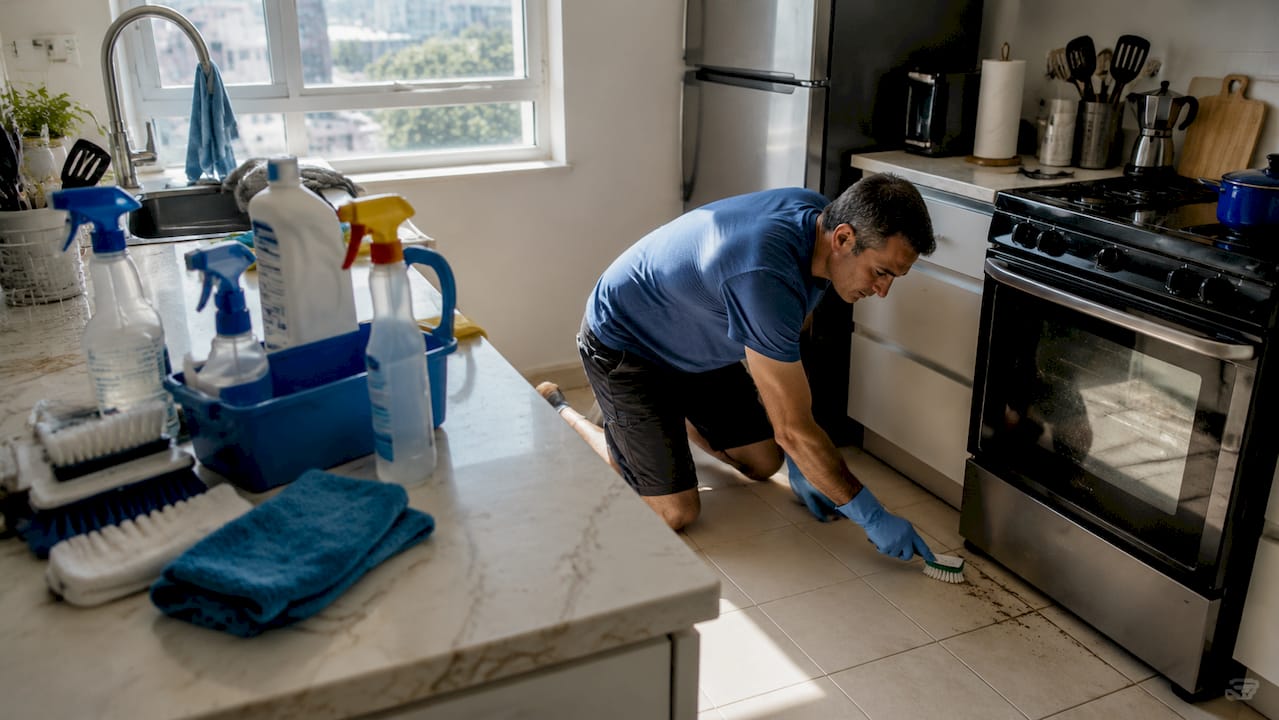
The most time-consuming tasks involve appliances. Oven interiors require degreasing agents and scrubbing to remove baked-on residue. Refrigerators need to be emptied, defrosted if necessary, and wiped down shelf by shelf. Dishwashers require filter cleaning and interior wipe-downs that most tenants skip entirely during their stay. These are also the areas that cause inspection failures most often.
Beyond appliances, the scope includes:
- Grout scrubbing in bathrooms and kitchens
- Cleaning inside cabinets and drawers
- Washing window tracks and sills
- Wiping down baseboards, door frames, and light switches
- Treating carpets with shampooing or steam cleaning
- Addressing secondary spaces like garages, laundry rooms, and storage areas
- Odor treatment, particularly in pet-occupied or smoke-affected properties
Deep cleaning improves indoor air quality by eliminating dust, mold, and bacteria that accumulate over long-term occupancy. This matters not just for aesthetics but for the health of incoming tenants.
Pro Tip: Oven drip pans, refrigerator door seals, and window tracks are the three spots most likely to trigger a deposit dispute. Inspect these first, before you clean anything else, so you know where to allocate your time.
How does deep cleaning differ from standard turnover and end-of-tenancy cleaning?
The industry uses several terms interchangeably, but they describe different levels of work. Understanding the distinction helps tenants know what is expected and helps property managers budget time and cost accurately.
Standard end-of-tenancy cleaning covers the visible surfaces: mopping floors, wiping counters, cleaning toilets and sinks, and removing trash. It is the baseline expectation in most tenancy agreements. Vacation rental turnover cleaning, which applies to short-term rentals, is guest-ready cleaning performed between every stay. It prioritizes speed and presentation over depth. A vacation rental turnover cleaning checklist typically includes linen changes, surface wipes, and restocking supplies rather than appliance interiors or grout work.
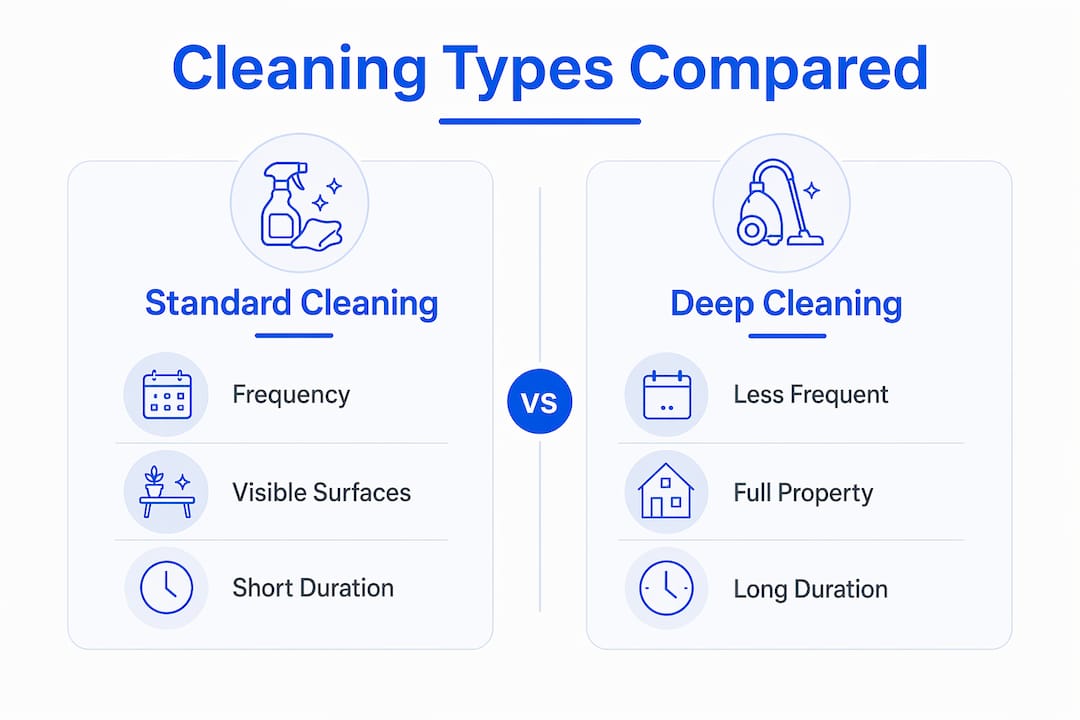
Deep cleaning after long tenancy sits at a different level entirely. It is less frequent, more labor-intensive, and targets the hidden buildup that accumulates over months or years. Distinguishing turnover cleaning from periodic deep cleaning is key for property managers who need to balance costs against long-term property condition.
| Cleaning type | Frequency | Focus areas | Time required |
|---|---|---|---|
| Standard end-of-tenancy | Once at move-out | Visible surfaces, floors, bathrooms | 2 to 3 hours |
| Vacation rental turnover | After every guest stay | Linens, surfaces, restocking | 1 to 2 hours |
| Deep clean after long tenancy | Every 1 to 3 years or at move-out | Appliances, grout, hidden areas, odors | 3 to 6 hours |
| Seasonal deep clean | Every 3 to 6 months | HVAC filters, cabinets, carpets | 3 to 5 hours |
Regular deep cleaning every 3 to 6 months prevents the kind of property degradation that turnover-only cleaning misses. For long-term rentals, skipping this level of maintenance accelerates visible wear and increases the cost of restoration at move-out.
What are the legal and practical considerations for tenants and landlords?
Cleaning obligations after tenancy are grounded in one principle: the property must be returned in the same condition it was received, accounting for fair wear and tear. Cleaning costs after tenancy relate to whether the property meets the agreed cleanliness standard at check-in, not to a blanket requirement for professional cleaning unless the tenancy agreement specifically states otherwise.
This distinction matters. A landlord cannot legally require a tenant to hire a professional cleaner simply because they prefer it. However, if the property is returned in a dirtier condition than it was received, the landlord can deduct reasonable cleaning costs from the deposit. The burden of proof falls on documented evidence.
Here is how both parties can protect themselves:
- Complete a detailed check-in report with photographs before the tenancy begins. This is the baseline against which move-out condition is measured.
- Conduct a pre-move-out walkthrough at least one week before the end of tenancy to identify issues while there is still time to address them.
- Document the cleaned property with timestamped photographs immediately after cleaning and before handing back keys.
- Keep all professional cleaning receipts if you hire a service. These receipts are persuasive evidence in deposit disputes.
- Understand fair wear and tear. A carpet that has faded over five years is wear and tear. A carpet stained with pet urine is damage. Landlords cannot charge for the former.
Visual evidence is more persuasive than verbal claims in any deposit dispute. A well-documented check-in and check-out process removes ambiguity and protects both sides.
Pro Tip: Perform your move-out inspection and photograph everything before you begin cleaning. This preserves the baseline record. If you clean first and then photograph, you lose the documentation that proves the property’s condition at handover.
How can tenants execute a deep clean effectively at move-out?
Effective move-out deep cleaning follows a logical sequence. Starting from the top of each room and working downward prevents re-contaminating surfaces you have already cleaned. Tackling rooms in a consistent order reduces backtracking and wasted time.
A practical move-out deep cleaning sequence:
- Remove all personal belongings and trash from every room.
- Photograph the property before cleaning begins.
- Start with the kitchen: clean the oven interior, refrigerator, dishwasher filter, and inside all cabinets.
- Move to bathrooms: scrub grout, descale faucets and showerheads, clean toilet bases and behind the toilet.
- Address all living areas: wipe baseboards, door frames, light switches, and window tracks.
- Clean windows from inside, including sills and frames.
- Treat carpets with a carpet cleaner or arrange professional shampooing.
- Clean secondary spaces: garage floors, laundry room appliances, and any storage areas.
- Photograph the finished property with timestamps.
For supplies, products like Bar Keepers Friend work well on grout and stainless steel. Simple Green handles grease in kitchen appliances. A steam cleaner covers multiple surfaces including tile, grout, and upholstery. The San Antonio deep cleaning checklist from Clean Space SA covers these tasks in detail and is worth reviewing before you start.
Key inspection-critical areas to prioritize:
- Oven interior and drip pans
- Refrigerator shelves, drawers, and door seals
- Bathroom grout and caulk lines
- Window tracks and sliding door channels
- Behind and underneath appliances
- Tops of cabinets and ceiling fan blades
A move-out cleaning checklist that covers toilets, sinks, showers, appliances, baseboards, windows, and door frames gives tenants the clearest path to meeting landlord expectations. If the scope feels unmanageable, hiring a professional service like Clean Space SA for move-out cleaning removes the guesswork and provides documentation through receipts.
Key takeaways
A deep clean after long tenancy is the single most effective way to protect a tenant’s deposit and prepare a property for new occupants without disputes.
| Point | Details |
|---|---|
| Deep clean scope | Covers appliances, grout, window tracks, odors, and secondary spaces beyond standard cleaning. |
| Time investment | Expect 3 to 6 hours for a thorough post-tenancy deep clean in an average-sized home. |
| Legal standard | Tenants must return the property to check-in condition, not necessarily hire professionals unless specified. |
| Documentation matters | Timestamped photographs and professional cleaning receipts are the strongest evidence in deposit disputes. |
| Frequency for landlords | Deep cleaning every 3 to 6 months prevents long-term property degradation between tenancies. |
What I’ve learned from years of post-tenancy cleaning
The most common failure I see is tenants treating move-out cleaning as an extension of their regular Saturday tidy. They mop the floors, wipe the counters, and hand back the keys. Then they lose a significant portion of their deposit over an oven interior or a bathroom grout line they never touched.
The second most common failure is on the landlord side: no documented check-in condition. Without photographs from move-in, any dispute becomes a he-said-she-said situation that often gets resolved in the tenant’s favor by default. Both parties lose time and money that proper documentation would have saved.
What actually works is treating the deep clean as a project with a defined scope and a sequence. Start with documentation, then repairs, then cleaning. Never clean before you photograph. Never hand back keys without a receipt if you hired help. The cost of a professional clean is almost always less than the cost of a deposit deduction, and the receipt itself is evidence.
For property managers handling multiple units, scheduling a deep clean for vacation rentals or long-term rentals on a fixed calendar, rather than waiting until problems appear, is the approach that preserves property value over time. Reactive cleaning costs more than proactive cleaning. That is a pattern I have seen play out consistently across properties of every size.
— Jean
Get your property inspection-ready with Clean Space SA
When the scope of a post-tenancy deep clean feels too large to tackle alone, Clean Space SA handles it with a trained, background-checked team that knows exactly what landlords and inspectors look for. From oven interiors and grout scrubbing to carpet treatment and window tracks, the team covers every inspection-critical area in properties across Leon Valley, Helotes, and Alamo Ranch. Clean Space SA provides residential cleaning services built specifically for rental turnovers and move-out situations, with transparent pricing and receipts you can use as deposit protection documentation. Book online and get the property ready without the stress.
FAQ
What is a deep clean after long tenancy?
A deep clean after long tenancy is an intensive cleaning process that restores a rental property to its original condition by targeting accumulated grime, appliance interiors, grout, odors, and hidden areas that routine cleaning does not address. It goes well beyond standard end-of-tenancy cleaning in both scope and time.
Is professional deep cleaning required at the end of a tenancy?
Professional cleaning is not legally required unless the tenancy agreement specifically states it. Tenants must return the property to the cleanliness standard documented at check-in, and any cleaning method that achieves that standard satisfies the obligation.
How long does a deep clean after tenancy take?
A thorough deep clean after long tenancy typically takes 3 to 6 hours for an average-sized home, depending on the property’s condition and the number of rooms and appliances involved.
What areas are most likely to cause deposit deductions?
Oven drip pans, refrigerator interiors, bathroom grout, and window tracks are the most frequently cited areas in deposit disputes because they are commonly missed during move-out cleaning.
How does deep cleaning differ from vacation rental turnover cleaning?
Vacation rental turnover cleaning is performed between every guest stay and focuses on speed, presentation, and linen changes. Deep cleaning is less frequent, more labor-intensive, and targets hidden buildup including cabinet interiors, HVAC filters, and carpet shampooing that turnover cleaning does not cover.
Recommended
- Air BnB Clean – Clean Space Sa | commercial cleaning | San Antonio, TX, USA
- What Is Post-Party Rental Cleaning? a Host’s Guide
- Move-In / Move-Out Cleaning – Clean Space Sa | commercial cleaning | San Antonio, TX, USA
Jean runs growth strategy at AimSetWin, a performance marketing agency specializing in local service businesses across Texas. he's helped plumbers, HVAC companies, pest control operators, and home service brands build predictable revenue systems using data-driven advertising and conversion optimization.


