

Discover how home cleaning service works to simplify your life. Learn the steps, pricing, and expectations for a spotless home today!
A home cleaning service is a professional operation where trained teams follow structured, repeatable workflows to clean and maintain residential spaces to a consistent standard. Understanding how home cleaning service works removes the guesswork from hiring, pricing, and communicating with your provider. Whether you are a homeowner in Leon Valley, a renter in Alamo Ranch, or a property manager overseeing multiple units, the process follows a predictable structure from first contact to final walkthrough. This guide covers every stage: booking, the actual cleaning workflow, pricing models, and quality control.
How do you book and prepare for a home cleaning service?
The home cleaning service process starts before a single sponge touches your countertop. Most professional services, including Clean Space SA, offer three booking channels: an online form, a phone call, or a direct scheduling portal. During booking, you will typically provide your home’s square footage, the number of bedrooms and bathrooms, the type of clean you need (routine maintenance, deep clean, or move-in/move-out), and any special requests such as interior oven cleaning or window washing.
Once booked, preparation is your responsibility. The most common misconception is that you need to pre-clean before the cleaners arrive. Professional cleaners prefer starting with the home as-is so they can accurately assess dirt levels and allocate time where it matters most. Pre-cleaning actually wastes your time and skews the baseline assessment.
What genuinely helps your cleaning team:
- Declutter surfaces so cleaners can access countertops, floors, and shelving without moving personal items
- Secure pets in a separate room or arrange for them to be elsewhere during the visit
- Provide clear entry instructions including door codes, key locations, or parking details
- Flag priority zones such as a bathroom used by a child with allergies or a kitchen that sees heavy daily cooking
- Note any sensitive materials like antique furniture, delicate surfaces, or areas to avoid
Explicitly pointing out high-priority areas during an initial walkthrough is critical because cleaners do not inherently know your preferences without guidance. A two-minute conversation at the start of a first visit can prevent weeks of misaligned expectations.
Pro Tip: Write a short note or use the booking form’s comments field to list your top three priorities. Cleaners who know your pain points deliver noticeably better results from visit one.
What does the actual home cleaning process involve?
The cleaning workflow itself follows a methodology that professional firms have standardized for a reason. All professional firms use room-by-room workflows to ensure consistency and reduce error. Within each room, the sequence is always top to bottom: ceiling fans and light fixtures first, then surfaces and appliances, then baseboards and floors last. This prevents dust and debris from resettling on areas already cleaned.
Here is how a standard residential cleaning visit unfolds:
- Entry and setup: The team reviews any client notes, confirms the scope, and unloads equipment.
- Dry tasks first: Dusting, wiping down surfaces, and removing cobwebs happen before any wet cleaning begins.
- Wet cleaning and sanitization: Bathrooms and kitchens receive disinfectant treatment on high-touch surfaces including faucets, handles, and toilet seats.
- Appliance exteriors: Stovetops, microwave exteriors, and refrigerator handles are wiped down during routine visits.
- Floor care: Vacuuming precedes mopping in every room to avoid pushing debris into wet surfaces.
- Final check: The team does a room-by-room visual review before leaving.
The distinction between a routine maintenance clean and a deep clean matters significantly. Industry experts distinguish professional cleaning services from housekeepers by scope of work. A routine clean maintains a home that is already at a baseline standard. A deep clean addresses accumulated grime in grout lines, inside appliances, behind furniture, and on surfaces rarely touched during weekly upkeep. Deep cleans use specialized equipment and chemical techniques beyond what standard maintenance requires.
| Feature | Routine maintenance clean | Deep clean |
|---|---|---|
| Frequency | Weekly, biweekly, or monthly | One-time or seasonal |
| Scope | Surface-level cleaning of all rooms | Hidden grime, appliances, grout, baseboards |
| Time required | 1.5 to 3 hours (established home) | 3 to 6+ hours depending on home size |
| Equipment | Standard tools and products | Specialized degreasers, steam equipment |
| Best for | Ongoing upkeep | First visit, post-construction, move-in/out |
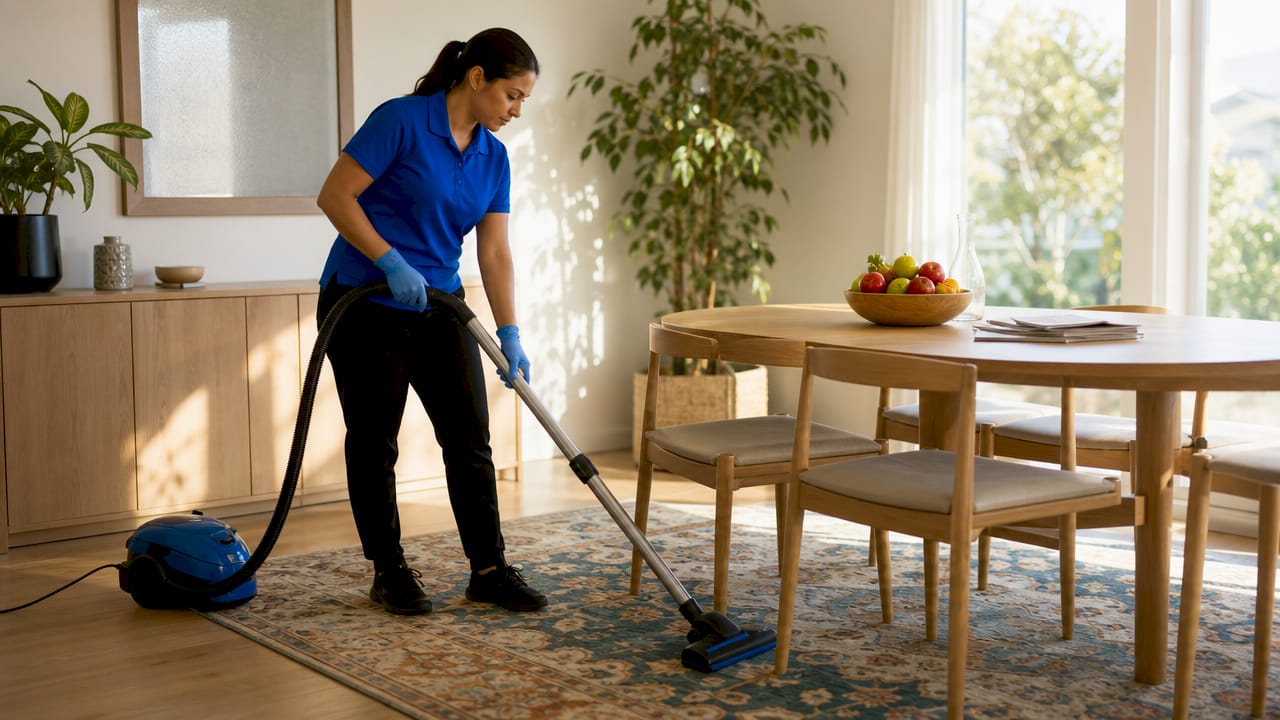
Initial visits take longer because they reset accumulated dirt. Once that baseline is established, subsequent maintenance visits are faster and more focused. This is why most services require or strongly recommend a deep clean before starting a recurring schedule.
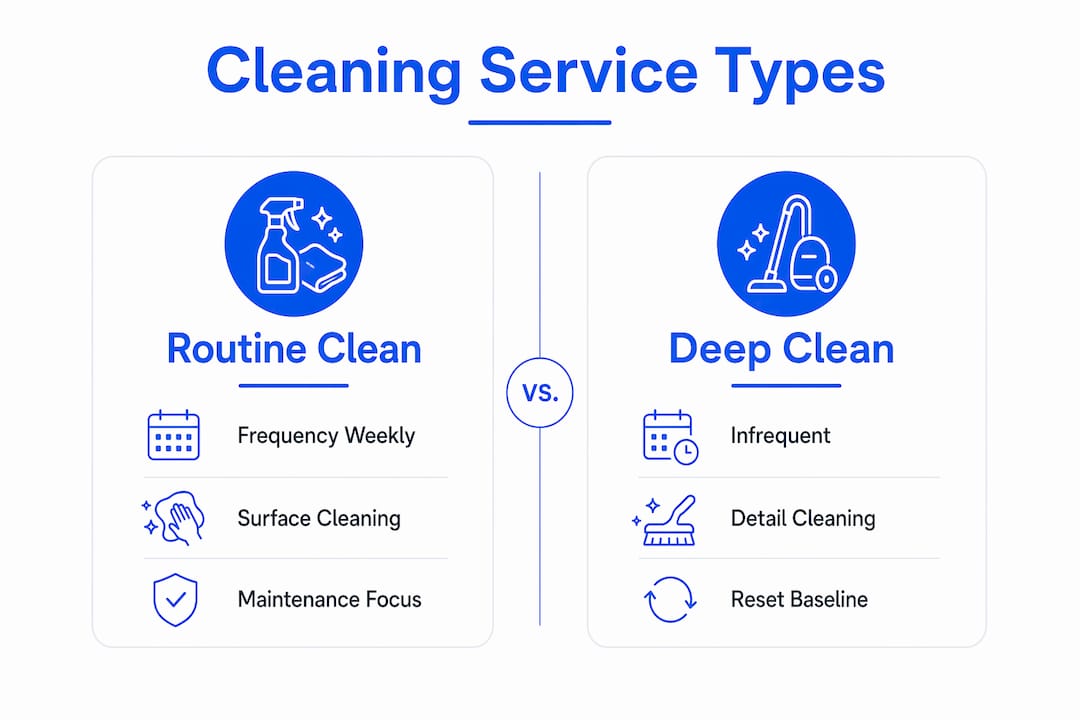
Pro Tip: If you are scheduling recurring service for the first time, budget for a deep clean as your first appointment. You will see a measurable difference in how quickly the home stays clean between visits.
How is pricing structured and what factors affect cost?
Cleaning service pricing follows two primary models. Flat-fee structures are the industry standard for routine maintenance visits, while hourly rates apply to deep cleans and specialty jobs. Flat fees give you predictability. Hourly rates reflect the variable nature of more intensive work where the time required depends heavily on the home’s condition.
Several factors influence what you pay:
- Home size: Square footage and the number of bedrooms and bathrooms are the primary cost drivers.
- Cleaning type: A deep clean or move-in/move-out service costs more than a standard maintenance visit.
- Frequency: Weekly clients typically pay less per visit than monthly clients because the home requires less effort to maintain.
- Add-ons: Interior oven cleaning, refrigerator interiors, window washing, and laundry folding each carry additional fees.
- Location and access: Homes in gated communities or with complex access requirements may incur a small surcharge.
Most services also have cancellation and rescheduling policies. Canceling within 24 to 48 hours of a scheduled visit often triggers a fee, typically 50% of the visit cost. Understanding these terms before signing up prevents surprises.
Pro Tip: Recurring clients almost always get the best per-visit rate. If you are on the fence between monthly and biweekly service, run the math on annual cost versus the time you spend cleaning yourself. The gap is usually smaller than people expect.
How do quality control and ongoing communication improve results?
Quality in professional cleaning is not assumed. It is verified. Effective services use digital checklists, post-clean inspections, and client feedback rather than relying on visual estimation alone. This documentation creates accountability at every visit and gives both the client and the provider a record of what was completed.
Standard quality assurance measures include:
- Pre-visit checklists that confirm scope and any client-specific instructions
- Supervisor spot checks on new clients or after complaints
- Re-clean guarantees that bring the team back within 24 to 48 hours if a specific area was missed
- Digital reporting tools that log completed tasks per room
Communication is the variable that separates a good cleaning relationship from a great one. Open feedback after the first few visits helps cleaners tailor routines to your home. If a cleaner consistently misses the area behind your bathroom door or uses a product that irritates your skin, saying so directly and promptly fixes the issue. Most clients who are dissatisfied never mention it and simply cancel.
“The best cleaning relationships are built on specifics, not assumptions. Tell your team what matters most, and they will prioritize it every time.”
Recurring cleaning services build stronger client relationships through familiarity and trust. When the same team visits your home repeatedly, they learn its quirks: the bathroom fan that collects dust faster than normal, the kitchen corner that needs extra attention, the living room rug that requires a second vacuum pass. That institutional knowledge is genuinely valuable and takes time to develop.
Key takeaways
A home cleaning service works best when clients understand the process, communicate their priorities clearly, and choose the right service type for their home’s current condition.
| Point | Details |
|---|---|
| Book with full details | Provide home size, cleaning type, and priority areas at booking to get accurate pricing and better results. |
| Skip the pre-clean | Cleaners assess dirt levels more accurately when the home is in its normal state before a visit. |
| Start with a deep clean | An initial deep clean establishes the baseline that makes all future maintenance visits faster and more effective. |
| Use flat fees for routine visits | Flat-rate pricing for recurring maintenance gives you cost predictability; hourly rates apply to specialty work. |
| Communicate after every visit | Specific feedback after the first few visits directly improves how well the team tailors their routine to your home. |
What I have learned about hiring cleaning services
After years of working in and around the home services industry, the thing that surprises clients most is how much the first visit sets the tone for everything that follows. Most people treat the initial booking as a transaction. The providers who deliver the best long-term results treat it as the start of a working relationship.
The second thing clients consistently underestimate is the value of specificity. Saying “please pay extra attention to the kitchen” is far less useful than saying “the stovetop burners need a soak and the cabinet handles collect grease.” Cleaners are skilled professionals, not mind readers. The more precise your instructions, the more precisely they can execute.
I have also seen clients sabotage their own service by over-preparing. Spending an hour tidying before the team arrives is not preparation. It is pre-cleaning, and it costs you time while giving the team an inaccurate picture of what your home actually needs. The best preparation steps are logistical: clear access, secured pets, and a written list of priorities.
One more thing worth saying plainly: the re-clean guarantee is only useful if you use it. Clients who quietly accept a missed area and say nothing are training their provider to repeat the same oversight. A quick message within 24 hours is not a complaint. It is the feedback loop that makes the service better for everyone.
— Jean
Clean Space SA makes the process simple from day one
Clean Space SA serves homeowners, renters, and property managers across San Antonio, including Leon Valley, Helotes, and Alamo Ranch, with a cleaning process built around transparency and consistency. Every new client starts with a thorough assessment, and the team is background-checked and trained to follow the same top-to-bottom methodology described in this article. Whether you need a one-time deep cleaning service to reset your home or a recurring residential cleaning plan that fits your schedule and budget, Clean Space SA handles the details so you do not have to. Booking takes minutes online, and the team brings everything needed to deliver results you can see.
FAQ
How does a home cleaning service work step by step?
A home cleaning service begins with booking and a home assessment, followed by a systematic room-by-room clean using a top-to-bottom methodology, and ends with a quality check before the team leaves. The first visit is typically a deep clean that establishes a baseline for all future maintenance visits.
What should I do to prepare for a cleaning service?
Secure your pets, clear access to the home, and leave a written note listing your top priorities. Avoid pre-cleaning, since professional teams assess dirt levels more accurately when the home is in its normal condition.
How is home cleaning service pricing calculated?
Pricing is typically a flat fee for recurring maintenance visits and an hourly rate for deep cleans or specialty services. Home size, cleaning type, frequency, and add-ons like interior appliance cleaning all affect the final cost.
What is the difference between a routine clean and a deep clean?
A routine clean maintains a home already at a baseline standard, covering surfaces, floors, and bathrooms. A deep clean addresses hidden grime in grout, inside appliances, and behind furniture using specialized equipment and stronger cleaning agents.
How do cleaning services handle quality control?
Professional services use digital checklists, supervisor inspections, and re-clean guarantees to verify quality rather than assuming it. Clients who provide specific feedback after the first few visits see the fastest improvement in service quality.
Recommended
- Clean Space Sa | commercial cleaning | San Antonio, TX, USA
- Clean Space Sa | commercial cleaning | San Antonio, TX, USA
- Residential Cleaning – Clean Space Sa | commercial cleaning | San Antonio, TX, USA
- Routine Home Cleaning Checklist for a Stress-Free Home
Jean runs growth strategy at AimSetWin, a performance marketing agency specializing in local service businesses across Texas. he's helped plumbers, HVAC companies, pest control operators, and home service brands build predictable revenue systems using data-driven advertising and conversion optimization.


