

Discover effective strategies to reduce cleaning costs in commercial spaces. Optimize budgeting and save while enhancing cleanliness!
Reducing cleaning costs in a commercial space means controlling labor, supplies, vendor contracts, and scheduling as one connected system, not as separate line items. A 10,000 sq ft general office cleaned three times per week typically costs $6,000 to $12,000 per month. That range is wide for a reason. The difference between the low and high end almost always comes down to operational decisions, not market rates. Business owners and property managers who treat janitorial services as a managed operation rather than a fixed purchase consistently spend less and get more.
How to reduce cleaning costs in a commercial space through smarter budgeting
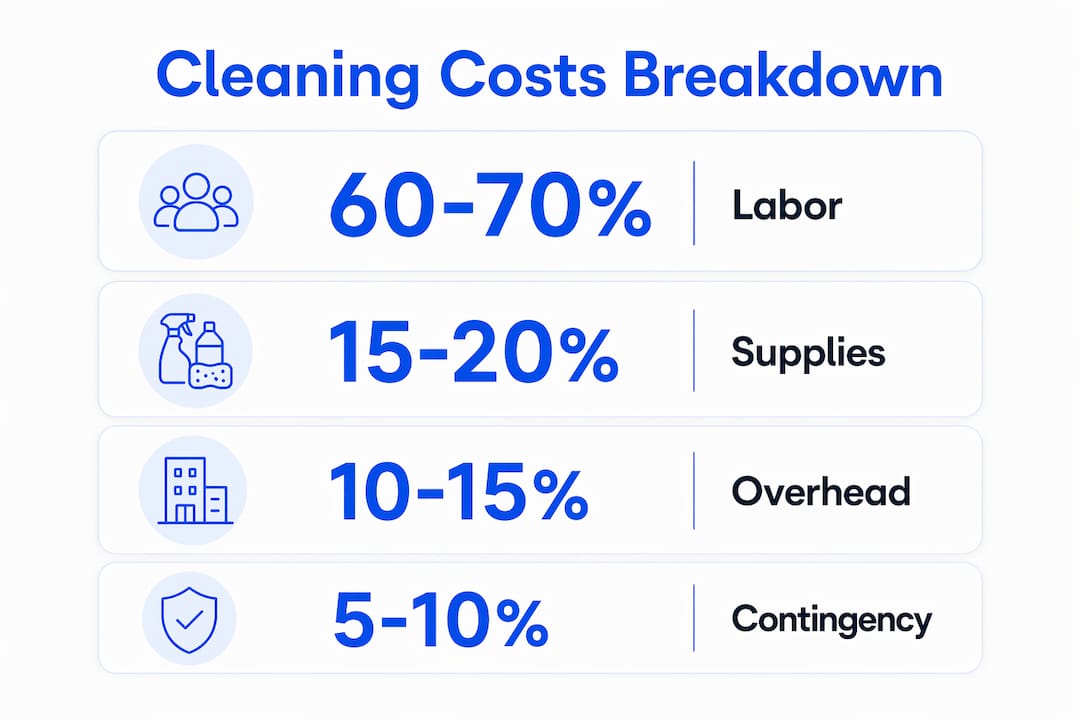
A commercial cleaning budget has three core cost drivers: labor, supplies, and overhead. Labor accounts for the largest share by far, typically 60–70% of total cleaning spend. Supplies and chemicals make up most of the remainder, with overhead covering equipment, insurance, and administration.
Routine cleaning represents 25–35% of total facility maintenance costs. That figure means cleaning is not a minor line item. It deserves the same structured planning you would apply to any major operational expense.
Build your budget around these components:
- Labor hours: Calculate actual hours needed per visit based on square footage and task complexity, not vendor estimates alone.
- Cleaning frequency: More frequent visits lower per-visit rates but raise total monthly spend. Match frequency to actual building use.
- Consumables: Paper products, trash liners, and cleaning chemicals fluctuate. Track usage monthly to catch waste early.
- Periodic services: Deep cleaning, carpet extraction, and window washing are often excluded from base contracts and hit budgets as surprises.
- Contingency reserve: Budget a 10–15% contingency reserve for reactive cleaning events like spills, post-event cleanup, or tenant move-outs.
Using a commercial cleaning price calculator to validate vendor bids against square footage and scope gives you a concrete baseline before you sign anything.
| Budget Component | Typical Share of Total Cost |
|---|---|
| Labor | 60–70% |
| Supplies and chemicals | 15–20% |
| Equipment and overhead | 10–15% |
| Periodic and specialty services | 5–10% |
Pro Tip: Tie your cleaning budget to occupancy data. A building running at 40% capacity on Fridays does not need the same cleaning scope as a full Monday. Adjusting scope by day reduces labor hours without reducing standards.
What scheduling strategies actually cut labor costs?
Labor is the single largest cost lever in any commercial cleaning budget. The way you schedule and deploy cleaning staff determines whether you spend efficiently or waste money on idle time and redundant tasks.
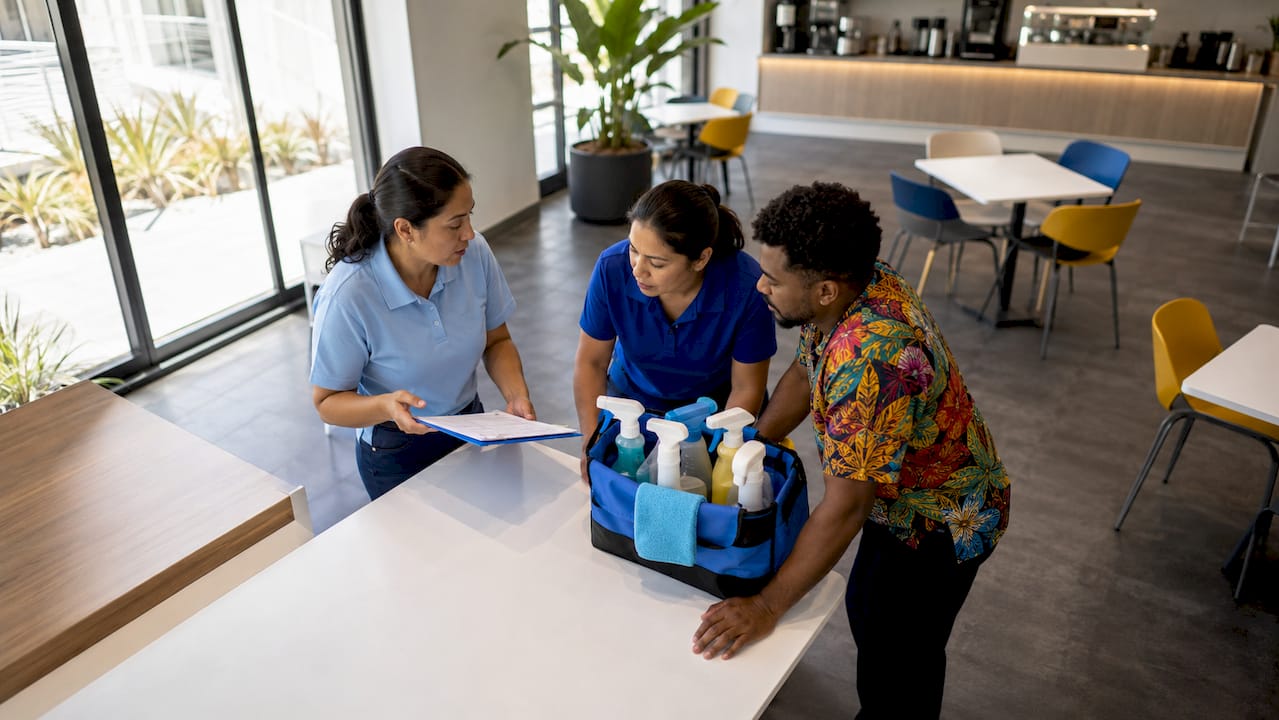
Zone cleaning assigns specific staff members to specific areas of a building. Each person becomes faster and more consistent in their zone over time. This approach reduces task overlap, cuts average time on task, and makes quality audits easier to conduct.
Demand-driven scheduling goes further. Occupancy-based cleaning using sensors or event-triggered work orders can reduce janitorial labor hours by around 23% without any drop in hygiene standards. A conference room that was never used on Tuesday does not need to be cleaned on Tuesday. Decoupling cleaning from fixed calendar schedules and tying it to actual building activity eliminates redundant labor and supply waste.
Here is a practical sequence for restructuring your cleaning schedule:
- Audit current labor hours. Pull time logs from your vendor or internal team for the past 90 days. Identify which tasks take the most time and which areas are cleaned regardless of use.
- Map occupancy patterns. Use badge access data, calendar bookings, or simple observation to identify low-traffic days and zones.
- Reassign tasks by zone. Restructure staff assignments so each person owns a defined area rather than rotating through the whole building.
- Shift high-labor tasks to off-peak windows. Floor care, restroom deep cleans, and trash collection done during low-occupancy periods reduce disruption and avoid premium labor rates.
- Set measurable time-on-task standards. Define how long each task should take per square foot. Use those standards to evaluate vendor performance and catch inefficiencies early.
Pro Tip: Negotiate service windows with your vendor that align with your building’s lowest-occupancy hours. Evening or early morning scheduling avoids overtime premiums and keeps cleaning staff out of the way of tenants and customers.
Learning how to set up an office cleaning schedule that reflects actual building use is one of the fastest ways to cut expenses without changing vendors or service quality.
Does cleaning automation actually pay for itself?
Autonomous cleaning robots pay for themselves. For large facilities of 30,000–40,000 sq ft or more, robots save $30,000 to $60,000 annually in floor care labor. The ROI payback window runs 12–24 months, and overnight operation shortens that to under 15 months by eliminating day-shift labor premiums entirely.
| Automation Option | Best For | Typical Savings |
|---|---|---|
| Autonomous floor scrubbers | Large open floor plans | $30,000–$60,000/year in labor |
| Metered chemical dosing systems | Any facility size | 15–30% reduction in chemical waste |
| Sensor-triggered restroom alerts | High-traffic restrooms | Reduces unnecessary restroom checks |
| Robotic vacuums | Carpeted office areas | Reduces daily vacuuming labor hours |
The financial case for automation goes beyond labor. Automation reduces chemical and water use and lowers slip-and-fall incidents, which carry their own liability costs. Metered dosing systems, which dispense precise chemical amounts per task, eliminate the overuse that drives up supply expenses.
The most important operational shift automation creates is role redeployment. Staff previously assigned to repetitive floor care move to quality control, specialty cleaning, and tenant-facing tasks. That shift improves retention and service consistency.
Practical considerations before you invest:
- Robots require flat, obstacle-free floor plans to operate efficiently.
- Subscription or lease models reduce upfront capital requirements and include maintenance.
- Overnight scheduling maximizes machine utilization and avoids disrupting building occupants.
- Staff training on robot oversight is required. Automation does not eliminate human judgment.
Pro Tip: If full robot purchase is not feasible, ask your cleaning vendor whether they operate autonomous equipment. Many commercial cleaning providers now include robotic floor care in high-frequency contracts at no additional cost.
How do vendor contracts affect your cleaning budget?
The contract you sign with a cleaning provider determines your costs more than the market rate does. High-frequency contracts of five visits per week yield 15–25% savings per visit compared to once-per-week service. Long-term contracts of 12–24 months reduce costs by an additional 5–10% compared to month-to-month arrangements. Both discounts reflect the vendor’s ability to plan staffing and routes more efficiently.
Vendor alignment through documented scopes and metrics prevents cost creep. When scope is vague, vendors fill gaps with add-on charges. When performance metrics are absent, quality drifts and corrective labor costs rise.
Tactics that protect your commercial cleaning budget during contract negotiations:
- Write a detailed scope of work. List every task, every frequency, and every area. Ambiguity always costs money later.
- Define performance metrics upfront. Inspection scores, response times for complaints, and restocking standards should all be contractual, not verbal.
- Negotiate add-on pricing in advance. Agree on rates for carpet cleaning, post-event cleanup, and emergency services before you need them.
- Review contracts annually. Building occupancy changes. Your cleaning scope should change with it.
- Validate bids internally. Multiply estimated labor hours by a fully loaded hourly rate to check whether a vendor’s per-square-foot price is realistic. This prevents underbidding that leads to service cuts mid-contract.
For a full breakdown of what to include before you sign, the commercial cleaning contract guide from Clean Space SA covers the key clauses that protect both budget and service quality. If you are actively negotiating, the contract negotiation guide walks through specific tactics for securing better terms.
What goes wrong when you cut cleaning costs too fast?
Cost reduction without planning creates new costs. The most common mistake is reducing cleaning frequency without redefining the scope of each visit. A building cleaned twice per week instead of five times needs longer visits and different task priorities. Skipping that adjustment leads to hygiene failures and tenant complaints that require corrective labor to fix.
“Cleaning should be managed as an operational system, not a commodity. Misalignment between scope, budget, and actual building use is the leading cause of cost creep in commercial janitorial contracts.” — Vanguard Cleaning Systems
Watch for these warning signs during any cost reduction effort:
- Tenant or employee complaints about restroom conditions or trash overflow
- Vendor invoices for services outside the base contract scope
- Visible soil buildup in high-traffic areas between scheduled visits
- Staff turnover at your cleaning vendor, which signals understaffing due to budget pressure
Monitor hygiene standards actively during any contract change. Monthly walk-through inspections with a simple checklist catch problems before they escalate. Tie vendor payment to inspection scores where possible. Performance-based oversight is the most effective tool for maintaining quality while minimizing cleaning expenses.
Using EPA SaferChoice certified products and metered dosing systems also prevents a common hidden cost: chemical overuse. When staff apply chemicals without measured dispensing, supply costs rise 20–30% above what the task actually requires.
Key takeaways
The most effective way to reduce cleaning costs in a commercial space is to manage janitorial services as an operational system, aligning labor, technology, and vendor contracts with actual building use rather than fixed schedules.
| Point | Details |
|---|---|
| Budget with real data | Include a 10–15% contingency reserve and validate vendor bids against square footage benchmarks. |
| Schedule by occupancy | Demand-driven cleaning reduces labor hours by around 23% without lowering hygiene standards. |
| Invest in automation | Robots save $30,000–$60,000 annually in floor care labor for large facilities with payback in 12–24 months. |
| Negotiate long-term contracts | Committing to 12–24 month agreements cuts costs 5–10% compared to month-to-month pricing. |
| Monitor quality actively | Monthly inspections and performance metrics prevent cost creep and corrective labor expenses. |
The operational mindset that actually saves money
I have reviewed a lot of commercial cleaning budgets over the years, and the pattern is consistent. The properties that spend the least per square foot are not the ones that negotiated the lowest rates. They are the ones that treat cleaning as a managed operation with defined inputs, measurable outputs, and regular reviews.
Aggressive price-cutting without operational alignment almost always backfires. You get a lower invoice for three months, then corrective cleaning, tenant complaints, and vendor turnover that cost more than the original savings. The math rarely works out in favor of the shortcut.
What does work is investing in the right tools and relationships. Automation handles repetitive floor care better than any human crew can at scale. Occupancy-based scheduling eliminates the waste built into fixed-calendar contracts. Long-term vendor partnerships create the trust and transparency needed to adjust scope without renegotiating from scratch every time your building use changes.
Eco-conscious cleaning products, particularly those certified by the EPA SaferChoice program, also deliver secondary savings that most property managers overlook. Lower chemical toxicity means fewer ventilation requirements, reduced liability exposure, and longer surface life on floors and fixtures.
The bottom line is this: cleaning quality and cost efficiency are not opposites. They are both outcomes of the same well-managed system.
— Jean
How clean space SA helps you spend less without sacrificing quality
Property managers and business owners in San Antonio do not have to choose between a clean facility and a controlled budget. Clean Space SA offers commercial cleaning services built around flexible scheduling, transparent pricing, and performance-driven standards that align with how your building actually operates.
Clean Space SA serves commercial clients across Leon Valley, Helotes, and Alamo Ranch with contracts structured to fit your occupancy patterns and budget goals. Whether you need daily office cleaning, periodic deep cleaning, or post-construction cleanup, every service is delivered by a background-checked, trained team with no hidden fees. Get a quote today and see exactly what your commercial cleaning budget can deliver.
FAQ
What is the average cost to clean a commercial office?
Commercial office cleaning costs range from $0.05 to $0.20 per square foot per visit depending on facility type and scope. A 10,000 sq ft office cleaned three times per week typically runs $6,000 to $12,000 per month.
How much can i save with a long-term cleaning contract?
Long-term contracts of 12–24 months reduce costs by 5–10% compared to month-to-month pricing. High-frequency service agreements of five visits per week can yield an additional 15–25% savings per visit.
Do cleaning robots make financial sense for smaller buildings?
Autonomous cleaning robots deliver the strongest ROI in facilities of 30,000 sq ft or more, with payback in 12–24 months. Smaller buildings benefit more from metered dosing systems and occupancy-based scheduling than from full robotic floor care.
How do i know if my cleaning vendor is overcharging?
Validate any bid by multiplying estimated labor hours by a fully loaded hourly rate and comparing that figure to the per-square-foot price quoted. If the numbers do not align, ask the vendor to itemize their cost breakdown before signing.
What is the biggest mistake property managers make when cutting cleaning costs?
Reducing cleaning frequency without adjusting the scope of each visit is the most common and costly error. Fewer visits require longer, more thorough service windows. Skipping that adjustment leads to hygiene failures and corrective labor that erases any savings.
Recommended
- How to Negotiate Commercial Cleaning Contract Terms
- How commercial cleaning pricing works for San Antonio landlords
Jean runs growth strategy at AimSetWin, a performance marketing agency specializing in local service businesses across Texas. he's helped plumbers, HVAC companies, pest control operators, and home service brands build predictable revenue systems using data-driven advertising and conversion optimization.


