

Discover the ultimate move out cleaning checklist for landlords. Ensure a smooth transition between tenants and avoid costly disputes with our 2026 guide!
A move-out cleaning checklist for landlords is a structured, room-by-room guide that confirms every surface, fixture, and appliance in a rental unit has been cleaned, inspected, and documented before a new tenant moves in. Without one, landlords face deposit disputes, delayed turnovers, and missed damage that costs far more to fix later. The most common pressure points are kitchens, bathrooms, and carpets, where tenant neglect tends to concentrate. This guide covers the full end of tenancy cleaning process: what to check, how to document it, what it costs, and how to handle disputes before they start.
1. The move-out cleaning checklist landlords need room by room
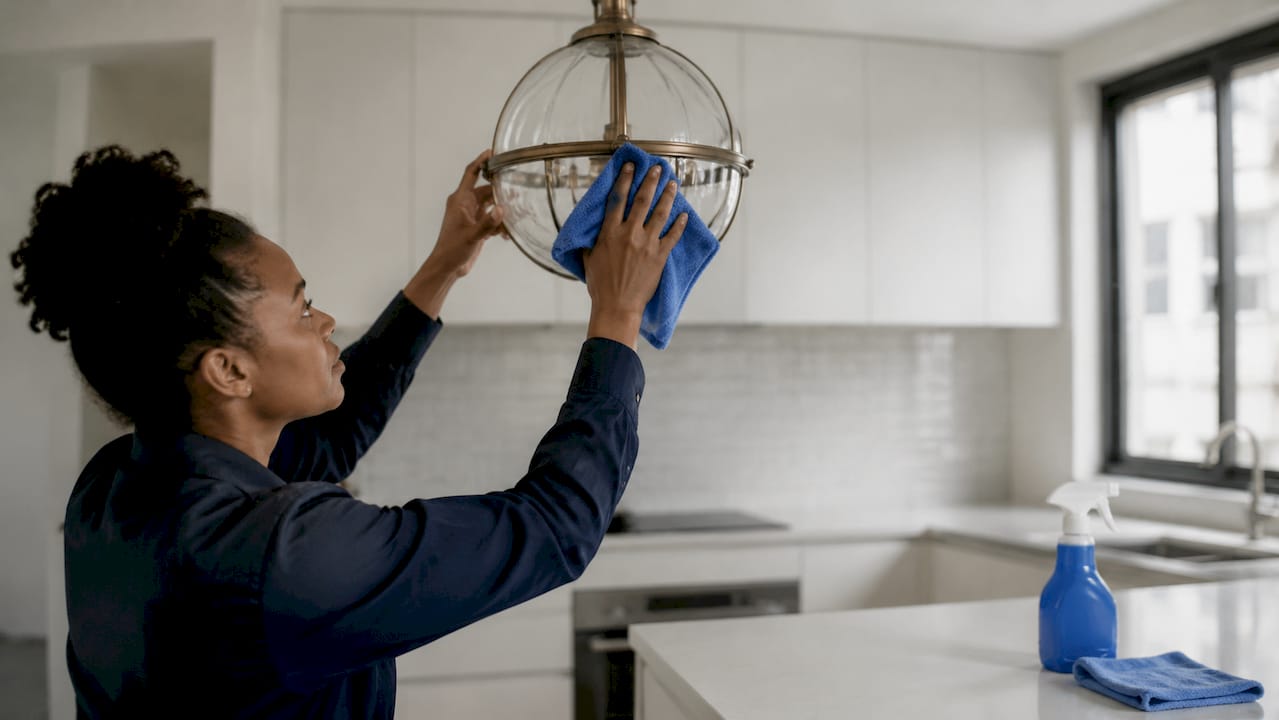
The most reliable move-out cleaning inspection checklist follows a top-down sequence. Start with ceiling fans, light fixtures, and vents before moving to surfaces, appliances, and floors. This prevents re-soiling areas you have already cleaned and makes the inspection more reliable.
Kitchen
The kitchen demands the most time and scrutiny. Check every item on this list before signing off:
- Oven interior, broiler drawer, and oven racks (grease buildup is the most common failure point)
- Refrigerator interior, door seals, and drip pan
- Dishwasher filter, spray arms, and door gasket
- Cabinet interiors and drawer tracks
- Countertops and backsplash tile grout
- Sink, faucet base, and garbage disposal
- Range hood filters and exhaust fan
Bathrooms
Bathrooms are where mineral deposits, mold in caulk, and grout staining hide. Inspect:
- Toilet base, tank lid, and seat hinges
- Shower and tub caulk lines for mold or discoloration
- Grout between tiles
- Exhaust fan cover and blade
- Vanity interior and mirror edges
- Floor grout and corners near the toilet
Bedrooms and living areas
These rooms look clean at a glance but fail on detail. Check closet shelves and rods, window tracks, blinds, baseboards, and light switch plates. Carpet condition gets its own note in your checklist because it directly affects deposit deductions.
Commonly missed spots
Hidden areas behind refrigerators, inside dishwasher filters, and along baseboards are the spots tenants most often skip. These are also the spots landlords check first during a formal inspection.
Pro Tip: Build your checklist in the same order you physically walk the unit. Consistency means nothing gets skipped, and your documentation matches your inspection path.
2. How to document cleaning condition to protect deposit deductions
Systematic documentation is what separates a landlord who wins a deposit dispute from one who loses it. Timestamped photos and videos of every defect-prone area are the standard practice among experienced landlords. A broad room shot is not enough. Close-ups of fixture bases, grout lines, cabinet interiors, and floor transitions are what hold up in arbitration or small claims court.
Follow this sequence for every inspection:
- Walk the unit in the same order every time, matching your checklist exactly.
- Photograph each room from the doorway first, then capture close-ups of every item on your checklist.
- Record a continuous video walkthrough with verbal narration noting condition as you go.
- Date-stamp all files and store them in a folder labeled by unit and move-out date.
- Compare every photo against your move-in documentation to separate new damage from pre-existing conditions.
The legal window matters here. Conduct inspections within 24 to 48 hours after tenants return keys. Waiting longer weakens your legal standing for deposit deductions in most states.
Digital photo-verified checklists have replaced paper forms for most professional property managers. Apps that attach photos directly to checklist line items create a timestamped, organized record that is far harder to dispute than a handwritten note.
Pro Tip: Detailed documentation includes close-ups of fixture bases, grout, cabinet interiors, and floor transitions. These specific shots are decisive in deposit disputes versus broad room shots.
3. Realistic cost and time benchmarks for move-out cleaning
Knowing what to budget prevents landlords from being caught off guard between tenants. Professional deep cleaning typically runs $150 to $350 per unit, with individual appliance cleaning adding $50 to $100 per appliance. Drywall patching ranges from $5 to $150 depending on hole size and location.
| Task | Typical cost range | Notes |
|---|---|---|
| Professional deep clean | $150 to $350 | Full unit, standard condition |
| Appliance cleaning (each) | $50 to $100 | Oven, refrigerator, dishwasher |
| Carpet cleaning | $80 to $200 | Varies by room count and staining |
| Drywall patching | $5 to $150 | Nail holes vs. larger damage |
| Lock rekeying | $50 to $150 | Per lock, standard residential |
Time estimates follow property size closely. Studios and one-bedrooms need 4 to 6 hours, two-bedrooms require 6 to 10 hours, and three-bedroom houses take 10 to 14 hours. Deep cleaning adds 30 to 50 percent more time to any of those figures.
Pet-occupied units consistently run at the high end of both cost and time ranges. Pet dander in HVAC filters, urine odor in carpet padding, and hair embedded in grout all require specialized treatment beyond standard cleaning. Budget an additional $75 to $150 for pet-specific remediation.
Parallel cleaning, where team members split tasks across rooms simultaneously rather than cleaning sequentially, cuts turnover time by 30 to 40 percent. For landlords managing multiple units, this single operational change has the biggest impact on reducing vacancy days.
4. How to handle common landlord challenges during move-out inspections
The most preventable disputes start with vague expectations. Providing tenants with a room-by-room checklist 30 days before lease end reduces cleaning disputes more effectively than any other single action. Tenants who receive a specific list of what is expected clean to a measurably higher standard than those who receive a general reminder.
Several challenges come up repeatedly in move-out inspections:
- Mineral buildup on fixtures: Hard water deposits on faucets and showerheads look like damage but are a cleaning issue. Document them with close-up photos and note whether they were present at move-in.
- Mold in caulk lines: Black mold in shower caulk is a cleaning failure, not normal wear and tear. Photograph it and note the location precisely in your checklist.
- Subtle carpet damage: Bleach spots, burn marks, and pet stains are damage. Matting from furniture is normal wear. Your move-in photos are the deciding evidence.
- Incomplete cleaning efforts: Tenants who clean but miss the oven interior, dishwasher filter, or behind the refrigerator are the most common scenario. Your checklist catches these gaps before you release the deposit.
The final walkthrough with the tenant present is the single best dispute-prevention tool available. When tenants see the deficiencies alongside you, they are far less likely to contest deductions later.
Keep a dedicated note field in your checklist for items that cross from cleaning into damage. “Grout discolored from mold” is a cleaning issue. “Tile cracked at grout line” is damage. That distinction determines whether you charge for cleaning or for repair, and it needs to be documented separately.
For landlords managing short-term rental cleaning checklists alongside long-term rentals, the documentation standards are identical. The turnaround window is just compressed.
Key takeaways
A landlord’s move-out cleaning checklist works only when it is specific, consistently applied, and backed by timestamped photo documentation from the first day of inspection.
| Point | Details |
|---|---|
| Room-by-room sequence | Follow a top-down, consistent order every inspection to avoid missed items and re-soiling. |
| 24 to 48-hour inspection window | Conduct the move-out inspection within two days of key return to preserve deposit deduction rights. |
| Photo documentation specifics | Capture close-ups of grout, fixture bases, and cabinet interiors, not just wide room shots. |
| Send checklist 30 days early | Giving tenants a specific list in advance reduces cleaning disputes more than any other step. |
| Budget for deep cleaning | Professional deep cleaning runs $150 to $350 per unit, with pets and larger units at the high end. |
What I’ve learned after years of move-out inspections
The landlords who rarely face deposit disputes are not the ones with the strictest lease clauses. They are the ones with the most consistent process. I have seen landlords lose arbitration cases not because the damage was unclear, but because their documentation was a mix of blurry phone photos, undated notes, and a checklist that did not match the actual unit layout. The tenant’s attorney had an easy job.
The shift from paper checklists to digital photo-verified systems changed everything for landlords managing more than two or three units. When every checklist item has a photo attached and a timestamp, disputes collapse quickly. Tenants know what you have.
Early communication is underrated. Sending a detailed move-out checklist 30 days before lease end feels like extra work, but it consistently produces cleaner units and fewer arguments. Tenants who know exactly what “clean oven” means actually clean the oven. Tenants who get a vague reminder to “leave the place clean” do not.
My honest recommendation for landlords in San Antonio managing multiple properties: schedule your inspection within 24 hours of key return, use a digital checklist with photo fields, and do the final walkthrough with the tenant present whenever possible. Those three habits eliminate the majority of disputes before they start.
For a deeper look at what the full end of tenancy cleaning process involves, especially after long-term tenancies, the scope is broader than most landlords expect on the first go.
— Jean
Ready to hand off move-out cleaning to professionals?
Managing a thorough move-out cleaning on your own takes 4 to 14 hours per unit, and that is before repairs. Clean Space SA handles move-out cleaning for landlords across San Antonio, including Leon Valley, Helotes, and Alamo Ranch, with detail-focused turnovers that meet inspection standards from day one.
Clean Space SA’s team is background-checked, trained to a consistent room-by-room standard, and familiar with what landlords need documented before new tenants arrive. Every job covers the spots tenants miss most: oven interiors, dishwasher filters, grout lines, and baseboards. You get a clean unit, faster vacancy turnaround, and one less thing to manage between tenants. Book your move-out clean and get your property ready for its next tenant.
FAQ
What does a move-out cleaning checklist for landlords include?
A move-out cleaning checklist for landlords covers every room in the unit with specific tasks: kitchen appliances, cabinet interiors, bathroom grout and caulk, carpet condition, baseboards, windows, and commonly missed spots like behind the refrigerator and inside the dishwasher filter.
How soon should landlords inspect after a tenant moves out?
Landlords should inspect within 24 to 48 hours of receiving the keys. Waiting longer can compromise your legal right to make deposit deductions in many states.
What is the difference between cleaning and normal wear and tear?
Cleaning issues include dirty ovens, mold in caulk, and grease on range hoods. Normal wear and tear covers carpet matting from furniture, minor scuffs on walls, and faded paint. Your move-in photos are the deciding evidence when the line is unclear.
How much does professional move-out cleaning cost?
Professional deep cleaning typically costs $150 to $350 per unit, with appliance cleaning adding $50 to $100 per appliance. Pet-occupied units and larger properties run toward the high end of both ranges.
How can landlords reduce disputes over deposit deductions?
Sending tenants a room-by-room checklist 30 days before move-out and conducting a final walkthrough with the tenant present are the two most effective steps. Timestamped photo documentation of every defect closes most disputes before they escalate.
Recommended
- What Is a Move-Out Cleaning Service? A Renter’s Guide
- Deep Clean After Long Tenancy: Landlord and Tenant Guide
- Move-In / Move-Out Cleaning – Clean Space Sa | commercial cleaning | San Antonio, TX, USA
- Your San Antonio House Cleaning Supplies Checklist for 2026
Jean runs growth strategy at AimSetWin, a performance marketing agency specializing in local service businesses across Texas. he's helped plumbers, HVAC companies, pest control operators, and home service brands build predictable revenue systems using data-driven advertising and conversion optimization.


