

Discover what deep cleaning includes and how it differs from regular cleaning. Save time and money with our complete guide to deep cleaning.
Most people assume deep cleaning is just regular cleaning with extra effort. It is not. What does deep cleaning include goes far beyond wiping counters and vacuuming floors. It targets the grime, soap scum, bacteria, and buildup that accumulates in hidden spots over months of normal use. Understanding the full scope of deep cleaning tasks before you book a service or tackle the job yourself will save you time, money, and frustration. This guide breaks down exactly what to include in deep cleaning, how it differs from your regular routine, and how to make sure you actually get what you pay for.
Table of Contents
- Key takeaways
- What does deep cleaning include, room by room
- The real difference between deep cleaning and regular cleaning
- Tools and products that actually get the job done
- How to prepare and what to ask your provider
- My honest take on deep cleaning expectations
- Ready to book a real deep clean in San Antonio?
- FAQ
Key takeaways
| Point | Details |
|---|---|
| Deep cleaning targets hidden dirt | It addresses areas like grout, vents, appliance interiors, and under furniture missed by regular cleaning. |
| Expect 4 to 8 hours for a full clean | A proper deep clean for a 3-bedroom home takes significantly longer than a standard cleaning session. |
| Costs about double regular cleaning | Budget $150 to $300 on average, reflecting the extra time and thoroughness involved. |
| Request a written task list upfront | A detailed checklist prevents misunderstandings and confirms you are getting a true deep clean. |
| Schedule every 3 to 6 months | Deep cleaning works best as a periodic reset, not a replacement for regular maintenance. |
What does deep cleaning include, room by room
Deep cleaning tasks target grime, soap scum, allergens, mildew, and bacteria hiding in spots that regular cleaning routines never touch. Here is a detailed breakdown of what a thorough deep clean covers across every major area of your home.
Kitchen
The kitchen is where deep cleaning earns its reputation. A proper service goes well beyond wiping the stovetop.
- Oven interior: Degreasing racks, scrubbing baked-on residue from walls, and cleaning the oven door glass
- Refrigerator interior: Removing shelves and drawers, wiping down all interior surfaces, and cleaning the rubber door seal
- Behind and under appliances: Pulling out the fridge and stove to clean the floor and wall surfaces underneath
- Cabinet fronts and handles: Cutting through grease buildup that collects from cooking
- Microwave interior and exterior: Including the turntable and steam vent
- Sink basin and faucet: Descaling faucet heads and scrubbing the basin to remove limescale deposits
- Window tracks and sills: Clearing accumulated dust and debris from the grooves
For kitchen appliance safety during a deep clean, oven cleaners require caution because harsh chemicals can permanently damage surrounding cabinet finishes if misapplied.
Bathrooms
Bathrooms get the most intensive treatment during a deep clean. Professionals focus on areas that harbor mold, mildew, and limescale.
- Scrubbing grout lines on tile walls and floors
- Descaling showerheads and removing limescale from taps
- Treating mold or mildew growth around caulking and in corners
- Cleaning toilet base, tank exterior, and under the rim
- Washing shower curtains or scrubbing shower door tracks
- Wiping down exhaust fan covers and light fixtures
Bedrooms and living areas
These rooms get less aggressive treatment than the kitchen or bathrooms, but a real deep clean still goes further than your weekly routine.
- Dusting ceiling fans, light fixtures, and the tops of door frames
- Cleaning window tracks, sills, and blinds
- Moving furniture to vacuum and mop underneath
- Scrubbing baseboards by hand, not just dusting them
- Vacuuming upholstered furniture, including under cushions
- Wiping down all switch plates, door handles, and trim
Pro Tip: Ask your provider specifically whether baseboard scrubbing and under-furniture vacuuming are included. These two tasks are the most commonly skipped when a service is cutting corners.
What is usually not included
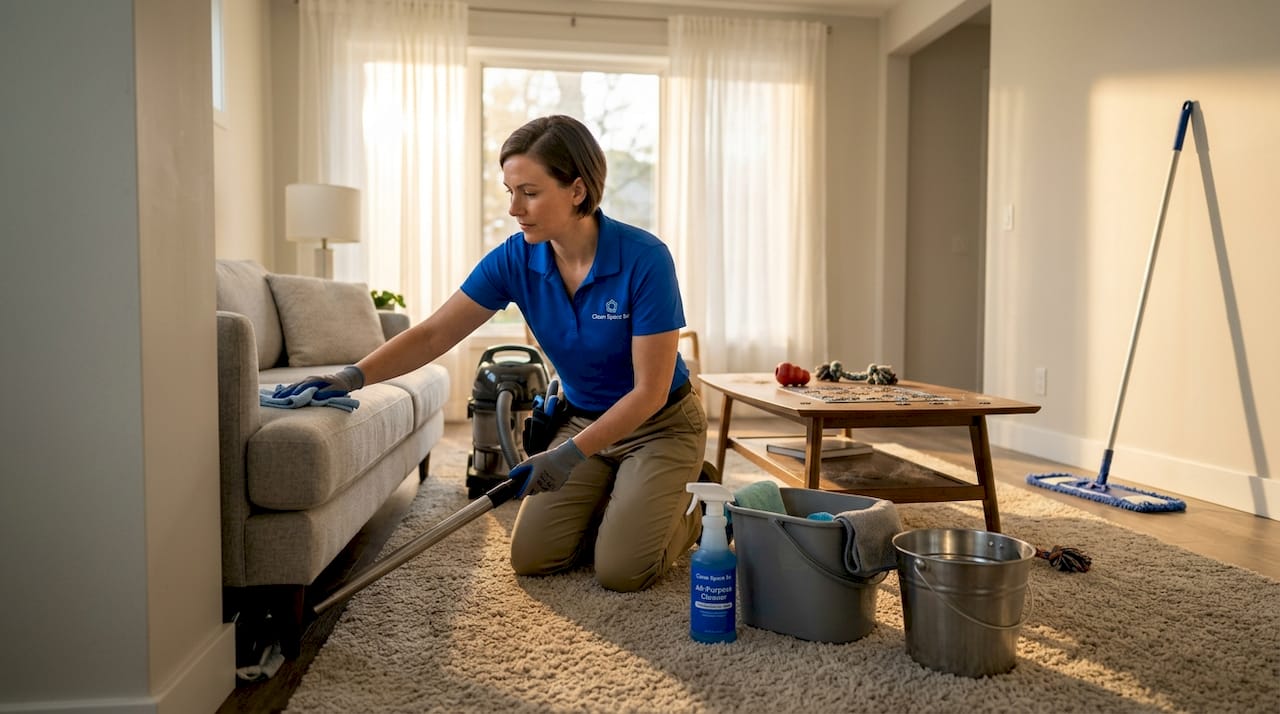
A standard deep cleaning service typically does not include exterior window washing, carpet shampooing, upholstery deep extraction, laundry, organizing closets, or post-construction debris removal. Those are specialty services that require separate booking. Clean Space SA, for example, offers residential cleaning services along with separate specialty options so you can customize your scope.
| Task | Included in deep clean | Included in regular clean |
|---|---|---|
| Oven interior degreasing | Yes | No |
| Grout scrubbing | Yes | No |
| Inside refrigerator | Yes | No |
| Behind appliances | Yes | No |
| Baseboard hand scrubbing | Yes | No |
| Window track cleaning | Yes | Rarely |
| Dusting surfaces | Yes | Yes |
| Vacuuming floors | Yes | Yes |
| Mopping floors | Yes | Yes |
| Wiping countertops | Yes | Yes |
The real difference between deep cleaning and regular cleaning
People confuse the two services constantly, and it costs them money when they do. Regular cleaning maintains a home that is already reasonably clean. Deep cleaning resets a home that has accumulated weeks or months of hidden buildup.
Here is how they break down in practical terms:
- Frequency: Regular cleaning happens weekly or every two weeks. Deep cleaning is recommended every 3 to 6 months to restore the home’s baseline cleanliness.
- Time: Regular cleaning for a 3-bedroom home takes 1.5 to 3 hours. Deep cleaning takes 4 to 8 hours or longer for the same home.
- Scope: Regular cleaning hits visible surfaces. Deep cleaning addresses hidden, neglected, and hard-to-reach areas.
- Cost: The average deep cleaning cost in the U.S. runs $150 to $300, roughly double what regular cleaning costs.
The single biggest red flag that you are not getting a true deep clean is the quoted time. If a company quotes two hours for a deep clean on a full-sized home, they are describing regular cleaning with a different label. Real deep cleaning takes at least four hours.
| Factor | Deep cleaning | Regular cleaning |
|---|---|---|
| Typical frequency | Every 3 to 6 months | Weekly or biweekly |
| Average duration | 4 to 8 hours | 1.5 to 3 hours |
| Average cost (U.S.) | $150 to $300 | $75 to $150 |
| Grout and tile scrubbing | Yes | No |
| Inside appliances | Yes | No |
| Behind/under furniture | Yes | No |
Understanding the difference between deep cleaning and residential services helps you set the right expectations before you book anything.
Tools and products that actually get the job done
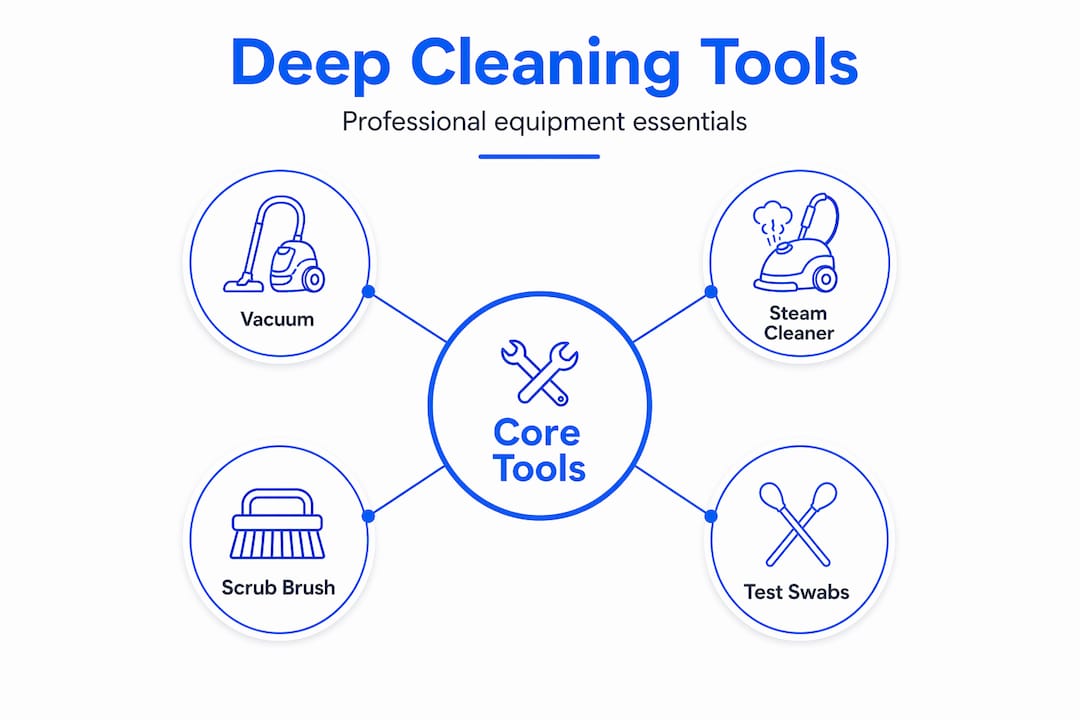
You do not need a cabinet full of specialty cleaners to deep clean effectively. Professionals recommend keeping the product list short. The basics cover most jobs: an all-purpose cleaner, white vinegar, baking soda, and microfiber cloths handle the majority of deep cleaning tasks. A vacuum with attachments and a steam cleaner round out a professional-grade setup.
Here is what matters most for specific tasks:
- Grout and tile: A stiff-bristle brush with a baking soda paste or a pH-neutral grout cleaner
- Oven interior: A dedicated oven degreaser with proper ventilation. Fumes from chemical oven cleaners are potent and require an open window or exhaust fan.
- Showerheads and faucets: White vinegar in a bag secured with a rubber band will dissolve limescale overnight without any scrubbing
- Steam cleaner: Ideal for tile grout, bathroom surfaces, and sealed hardwood floors where chemical residue is a concern
- Microfiber cloths: These pick up far more bacteria and dust than cotton rags and are reusable
The biggest mistake homeowners make when learning how to deep clean a house is buying a dozen different products for a dozen different surfaces. It wastes money and creates clutter. A few multipurpose products will genuinely outperform a full cart of specialty items in most situations.
Pro Tip: Before using any chemical oven cleaner, tape a layer of plastic wrap or paper towels over the cabinet face directly above and beside the oven. It protects the finish from drips that can cause permanent staining.
Professional teams bring their own equipment, which typically includes commercial-grade vacuums, steam machines, and tested cleaning solutions. That is a meaningful advantage over a DIY approach, especially on grout and appliance interiors that require sustained agitation. You can also check expert appliance cleaning guidance for kitchen-specific tips before tackling those areas yourself.
How to prepare and what to ask your provider
Getting a true deep clean starts before the cleaners arrive. Follow these steps to make sure you get what you pay for:
- Request a written task list before booking. A reputable provider will send you a detailed checklist. Written agreements prevent misunderstandings and confirm the scope before anyone shows up at your door.
- Declutter your surfaces and floors first. Cleaners work faster and more thoroughly when they are not moving piles of mail or toys to reach the actual surfaces. Decluttering before a service also reduces the time billed.
- Ask specifically about time estimates. Any provider quoting under four hours for a full-home deep clean should raise a flag. A genuine deep cleaning checklist for a 3-bedroom home requires at least four to eight hours of work.
- Confirm which rooms and items are included. Ask directly whether the oven interior, refrigerator, grout, and baseboards are part of the scope. Never assume.
- Ask about equipment. Professionals using steam cleaners and commercial vacuums will achieve noticeably better results on grout, tile, and carpet edges than those using standard household gear.
- Schedule follow-up maintenance. A deep clean works best when followed by regular cleaning every two to four weeks. Otherwise the buildup returns within a few months and you are back to square one.
For homeowners preparing a property for sale, a pre-listing deep clean in San Antonio follows a specific set of priorities that differ slightly from routine deep cleaning. Worth reviewing if your home is going on the market.
My honest take on deep cleaning expectations
I have spent years reviewing cleaning services and talking to homeowners who felt let down after booking what they thought was a deep clean. The frustration is almost always the same: they paid a premium price and received a thorough regular cleaning.
Here is what I have learned. Most cleaning companies default to their standard routine unless you explicitly push for the full scope. Grout scrubbing, oven interiors, and under-appliance cleaning are tasks teams skip when time runs short, and time always runs short when the job was underquoted. The only protection is asking for the task list in writing before you confirm the booking.
I also think people overcomplicate the DIY side of deep cleaning. I have seen homeowners spend $200 on specialty sprays, enzyme cleaners, and foaming treatments for a single bathroom. In my experience, vinegar, baking soda, a good scrub brush, and 45 minutes of actual effort outperform that entire cabinet. Products do not clean. Friction and time do.
My honest advice: deep clean every six months at minimum. Use a professional for the first one to reset the home properly, then maintain it yourself or with regular cleaning visits. That combination gives you the best results without paying deep cleaning prices four times a year.
— Jean
Ready to book a real deep clean in San Antonio?
If you are based in San Antonio, Leon Valley, Helotes, or Alamo Ranch and want to know exactly what a professional deep clean covers before you book, Clean Space SA provides transparent, itemized service descriptions so there are no surprises.
Clean Space SA’s residential deep cleaning service covers all major areas room by room, including oven interiors, grout scrubbing, baseboard hand scrubbing, inside appliances, and under furniture. Every team member is background-checked and trained to a consistent standard. If you are preparing for a move, Clean Space SA also handles move-in and move-out cleaning with a scope tailored to that specific situation. Contact them directly to request a full task checklist and a transparent quote before you commit.
FAQ
What does deep cleaning include that regular cleaning does not?
Deep cleaning includes oven interiors, refrigerator interiors, grout scrubbing, baseboard hand scrubbing, cleaning behind and under appliances, window tracks, and detailed light fixture dusting. Regular cleaning covers visible surfaces but skips these hidden and hard-to-reach areas.
How long does a professional deep clean take?
A deep clean for a typical 3-bedroom home takes 4 to 8 hours. If a provider quotes 2 hours, you are likely being sold a standard clean at a deep cleaning price.
How often should you deep clean your home?
Most experts recommend deep cleaning every 3 to 6 months. Regular weekly or biweekly cleaning maintains the home in between, but periodic deep cleaning addresses buildup that routine maintenance misses.
How much does a deep cleaning service cost?
The average deep cleaning cost in the U.S. ranges from $150 to $300, roughly double the cost of a regular cleaning. Prices vary based on home size, location, and the specific tasks included.
How do I make sure I am actually getting a deep clean?
Request a written task list before booking and confirm that oven interiors, grout, baseboards, and behind-appliance cleaning are explicitly included. A provider unable or unwilling to supply a detailed checklist is a sign to look elsewhere.
Recommended
- What Is Deep Clean for Office Spaces: A Manager’s Guide
- Deep clean before open house: your San Antonio guide
- How commercial cleaning differs from residential: San Antonio guide
- Commercial cleaning service checklist for San Antonio
Jean runs growth strategy at AimSetWin, a performance marketing agency specializing in local service businesses across Texas. he's helped plumbers, HVAC companies, pest control operators, and home service brands build predictable revenue systems using data-driven advertising and conversion optimization.


