

Discover why homes need deep cleaning for better health. Uncover hidden allergens, improve air quality, and maintain your home's longevity!
Most homeowners assume a weekly wipe-down keeps their home truly clean. It doesn’t. Understanding why homes need deep cleaning means looking past visible surfaces to what’s building up behind appliances, inside vents, under furniture, and deep in mattress fibers. Routine cleaning handles the obvious mess, but it consistently misses the hidden accumulations that affect your health, your air quality, and even the long-term condition of your home. This guide breaks down what deep cleaning actually does, why it matters, and how to know when your home is overdue for one.
Table of Contents
- Key Takeaways
- Why homes need deep cleaning beyond the surface
- How deep cleaning protects your health
- Signs your home needs deep cleaning now
- Room-by-room approach to deep cleaning
- My honest take on deep cleaning
- Let Clean Space SA handle the hard part
- FAQ
Key Takeaways
| Point | Details |
|---|---|
| Routine cleaning isn’t enough | Regular cleaning skips grout, vents, appliances, and other areas where allergens and grime accumulate. |
| Hidden allergens are everywhere | Even spotless-looking homes harbor dust mites, mold spores, and pet dander in places rarely touched. |
| Frequency depends on your lifestyle | Homes with pets, children, or allergy sufferers need deep cleaning more often than every 3 to 6 months. |
| Layered strategies work best | Combining deep cleaning with humidity control and HEPA filtration outperforms cleaning alone. |
| Deep cleaning protects your home | Regular deep cleans prevent premature surface wear, odor buildup, and costly repairs down the road. |
Why homes need deep cleaning beyond the surface
Regular cleaning covers the tasks most people do weekly: vacuuming visible floors, wiping counters, scrubbing the toilet, and mopping hard surfaces. It keeps a home looking presentable. What it doesn’t do is reach the places where dirt, bacteria, and allergens quietly compound over weeks and months.
Deep cleaning targets buildup on surfaces that rarely get attention. Think about the inside of your oven, the grime lodged in bathroom grout, the greasy residue on your kitchen backsplash, or the dust packed into baseboard vents. These are the spots that routine cleaning skips entirely, and they’re exactly where health problems begin.
Here’s what regular cleaning consistently misses:
- Baseboards and crown molding
- Inside kitchen appliances (oven, refrigerator coils, dishwasher filter)
- Grout lines in tile bathrooms and kitchens
- Ceiling fans and light fixtures
- Window tracks and door frames
- Behind and beneath heavy furniture
- HVAC vents and return air covers
- Mattresses, upholstery, and curtains
The frequency question matters too. Most homes benefit from a whole-home deep clean every 3 to 6 months, but that’s a starting point, not a hard rule. Homes with pets, young children, or residents with allergies often need it more frequently. Homes in dry, dusty climates like San Antonio also tend to accumulate particulate matter faster than average.
Pro Tip: Set a phone reminder every three months that simply says “deep clean audit.” Walk through the home room by room and note what hasn’t been touched since the last full clean. You’ll often surprise yourself.
How deep cleaning protects your health
This is where the importance of home sanitation stops being abstract and becomes genuinely alarming. The air inside most homes contains more pollutants than outdoor air, largely because of what settles into soft surfaces and enclosed spaces.
Take dust mites as a starting point. A single mattress can harbor between 100,000 and 10 million dust mites, and they thrive in environments with humidity above 50 to 60 percent. They’re not feeding on food crumbs either. Dust mites feed on shed human skin cells, approximately 1.5 grams of which the average person loses every single day. You cannot eliminate them by making your bed or vacuuming the carpet once a week.
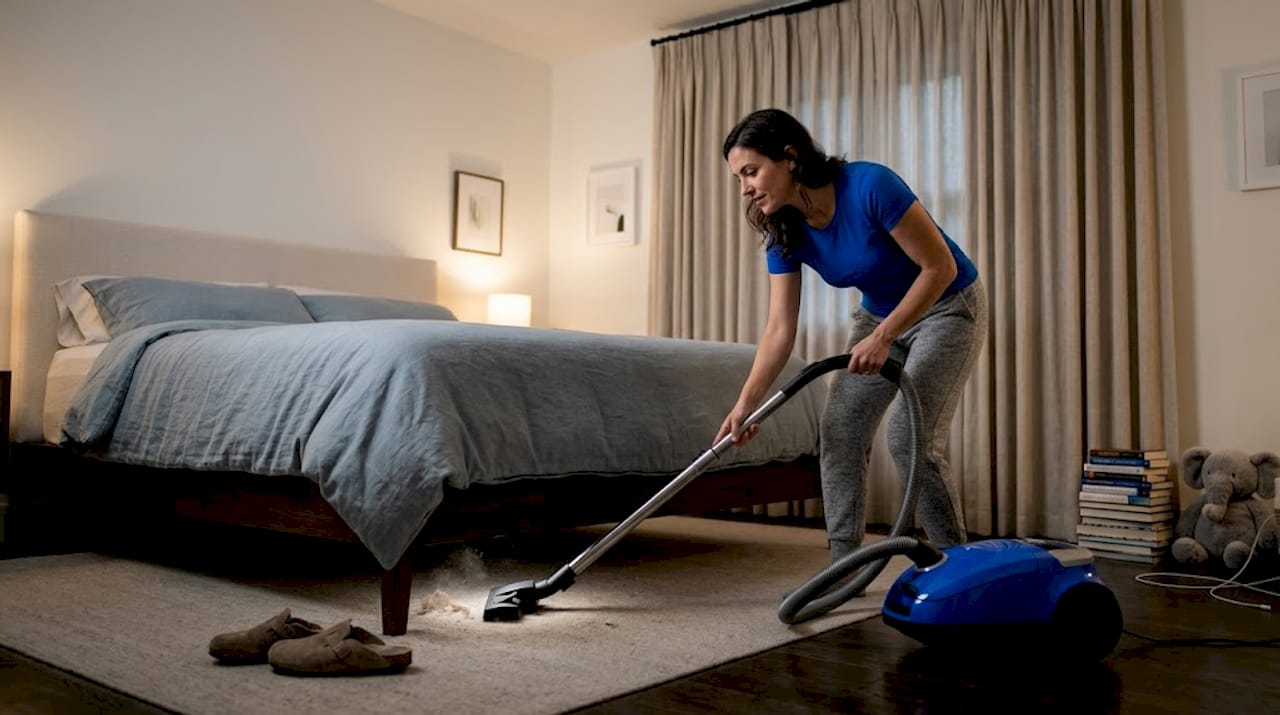
Then there’s pet dander. The assumption that only pet owners deal with this is flat-out wrong. Fel d 1 allergen was found in 100% of homes tested, including homes that had never housed a cat. Pet dander transfers on clothing, shoes, and guests, meaning it enters your home regardless of whether you own animals.
| Allergen | Primary Source | Where It Hides | Risk Level |
|---|---|---|---|
| Dust mites | Bedding, soft furniture | Mattresses, pillows, carpets | High |
| Pet dander | Pets and clothing transfer | Upholstery, vents, hard surfaces | High |
| Mold spores | Moisture and poor ventilation | Bathroom grout, under sinks, window seals | High |
| Pollen | Outdoor air, clothing | Floors, curtains, air ducts | Moderate |
| Bacteria | Kitchen and bathroom surfaces | Counters, cutting boards, handles | Moderate |
“Moisture management is the keystone for controlling indoor allergens effectively, making humidity control as important as cleaning itself.” — Mena Ceramics Expert Guide
The layered approach matters here. Combining cleaning, filtration, and ventilation provides a defense that no single method can match alone. Deep cleaning removes the buildup. A HEPA air purifier catches what gets disturbed. Proper ventilation prevents moisture from feeding mold growth in the first place.
Signs your home needs deep cleaning now
Knowing the signs your home needs deep cleaning takes the guesswork out of scheduling. Some signals are obvious. Others require you to slow down and pay attention.
Visible signs include:
- Dust visibly settled on furniture within days of wiping it
- Grout lines that have changed color from gray or white to brown or black
- A persistent stale or musty odor that doesn’t clear after opening windows
- Grease film on kitchen surfaces even when you cook infrequently
- Discoloration around vents or on ceiling corners
Hidden signs are trickier but equally important:
- Allergy symptoms or frequent headaches that are worse at home than elsewhere
- Increased sneezing, congestion, or skin irritation with no obvious cause
- Bathroom surfaces that feel grimy within days of cleaning
- Refrigerator or appliance odors that linger after you clean the interior
Neglecting deep cleaning leads to pest infestations, mold growth, and hidden grime accumulation that eventually requires costly professional remediation. What starts as a dirty oven seal or a humid bathroom corner can escalate into a much larger problem over time.
Pro Tip: The sniff test is underrated. Walk into your home after being away for a few hours and notice your first impression. Guests experience your home this way every time. A persistent stale or heavy smell is usually the clearest sign that a deep clean is overdue.
Room-by-room approach to deep cleaning
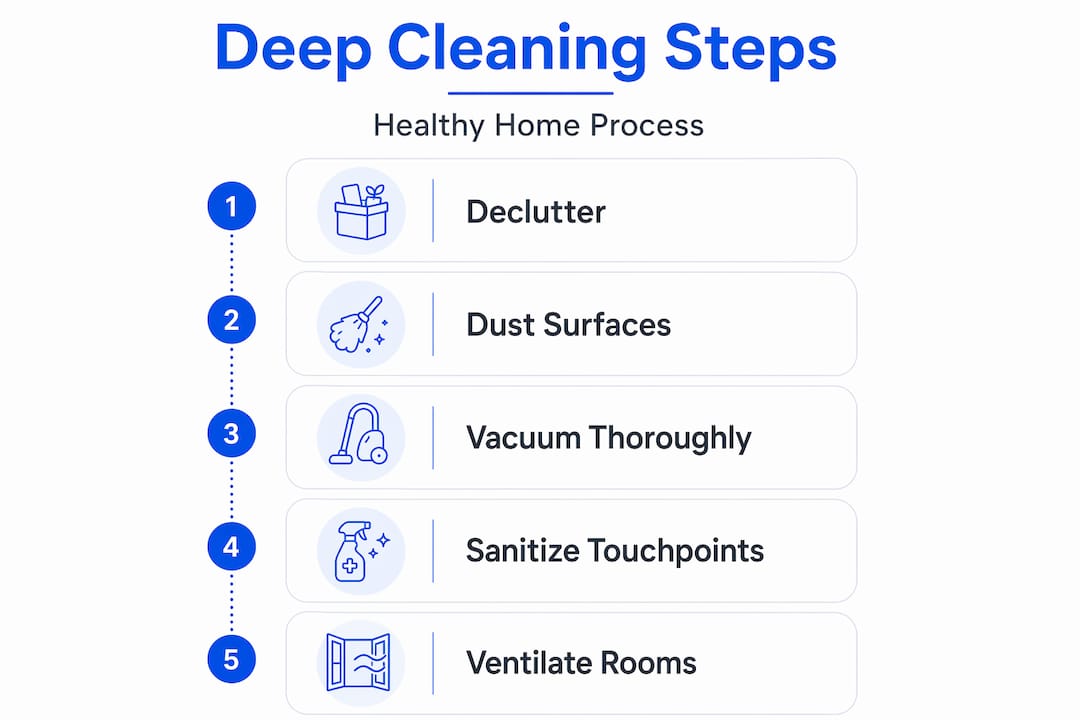
Effective deep cleaning is systematic, not random. Going room by room lets you give focused attention to the areas that accumulate the most grime and allergens, without feeling overwhelmed.
-
Kitchen first. This is the highest-priority room in any home. Clean inside the oven, degrease the range hood filter, wipe down refrigerator coils, descale the dishwasher, and scrub the backsplash. Pull the refrigerator out from the wall and vacuum behind it.
-
Bathrooms second. Attack grout with a stiff brush and a grout-safe cleaner. Scrub the inside of the toilet tank. Clean the exhaust fan cover. Check under the sink for moisture or early mold signs. Re-caulk around the tub if the current sealant looks cracked or dark.
-
Bedrooms and living areas. Flip and vacuum mattresses using a HEPA vacuum, then encase them in allergen-proof covers. Wash all curtains and dust blinds. Move furniture and vacuum underneath. Wipe down baseboards and clean ceiling fan blades.
-
HVAC and air quality. Replace your HVAC filters, clean the vent covers, and consider having your ducts inspected if they haven’t been checked in years. HEPA purifier placement near sleeping areas yields the highest allergen reduction. Placement matters more than simply having one.
-
Laundry and utility areas. Clean the inside of your washing machine drum with a hot cycle and a machine cleaner tablet. Wipe down the dryer lint trap housing, not just the screen. Check for moisture buildup around water heaters or utility pipes.
The right tools make a real difference. A HEPA-rated vacuum handles fine particles that standard models recirculate back into the air. Microfiber cloths trap dust rather than spreading it. For allergen-heavy areas, small consistent routines combined with moisture control outperform infrequent deep cleans done in a rush.
One habit worth building: a 10-minute nightly reset combined with one targeted deep-clean task per week. Wipe the stovetop daily, and dedicate 15 minutes on Saturday to a single overlooked area. Over a month, you’ve covered your whole home without a single exhausting marathon session. Deep cleaning resets the baseline of cleanliness so that regular upkeep actually keeps pace.
My honest take on deep cleaning
I’ve watched homeowners go years treating deep cleaning as a twice-a-decade chore reserved for spring or before company visits. And I get it. Life is busy, and the problems caused by skipping it are slow and invisible at first. But that’s exactly what makes them dangerous.
What I’ve learned from working in and around home cleaning is that people almost always underestimate how much of their indoor air quality problem is a cleaning problem. Someone spends hundreds on allergy medication and never considers that their mattress is hosting millions of dust mites or that their bathroom grout is harboring mold. The fix isn’t always pharmaceutical. Sometimes it’s a deep clean and a dehumidifier.
Deep cleaning lasting impact requires ongoing maintenance combined with environmental controls. Humidity management, extractor fan use, and regular HVAC filter changes are what lock in the results. A deep clean done once a year with no follow-through will lose its effect within months.
My honest recommendation: stop treating deep cleaning as an event and start treating it as a system. You don’t need to do everything at once. You need to make sure everything gets done eventually and that your home’s environment stays hostile to allergens in between. That shift in thinking is where the real benefit lives.
— Jean
Let Clean Space SA handle the hard part
Not every deep cleaning task is something you want to tackle on a weekend. Some jobs, like getting into HVAC vents, degreasing commercial-grade kitchen grime, or sanitizing a bathroom that’s been neglected for months, take time, tools, and experience that most people simply don’t have on hand.
Clean Space SA serves homeowners across Leon Valley, Helotes, and Alamo Ranch with professional residential cleaning that goes well beyond surface-level work. Their background-checked team is trained to handle the deep cleaning details that make a real difference in your home’s air quality and overall condition. Whether you need a one-time reset or want to schedule recurring deep cleans, getting a quote takes just minutes. For those in the middle of a move, their move-in and move-out cleaning service covers every corner before you settle in or hand over the keys.
FAQ
What is the difference between regular and deep cleaning?
Regular cleaning covers visible surfaces like floors, counters, and bathrooms on a routine basis. Deep cleaning goes further, targeting grout, appliance interiors, vents, baseboards, and other areas that accumulate buildup over time.
How often should a home be deep cleaned?
Most homes benefit from a deep clean every 3 to 6 months, though homes with pets, children, or allergy sufferers may need it more frequently.
What are the clearest signs your home needs deep cleaning?
Persistent odors, visible grout discoloration, allergy symptoms that worsen at home, and dust that returns within days of wiping surfaces are all strong indicators that a deep clean is overdue.
Can deep cleaning really improve allergy symptoms?
Yes. Removing dust mites, mold, and pet dander from mattresses, upholstery, and vents directly reduces allergen exposure. Pairing a deep clean with humidity control and HEPA filtration produces the most noticeable improvement.
Does neglecting deep cleaning damage your home?
Skipping deep cleaning leads to mold growth, pest attraction, and surface degradation that becomes expensive to reverse over time.
Recommended
- Residential Cleaning – Clean Space Sa | commercial cleaning | San Antonio, TX, USA
- Clean Space Sa | commercial cleaning | San Antonio, TX, USA
- Clean Space Sa | commercial cleaning | San Antonio, TX, USA
- Move-In / Move-Out Cleaning – Clean Space Sa | commercial cleaning | San Antonio, TX, USA
Jean runs growth strategy at AimSetWin, a performance marketing agency specializing in local service businesses across Texas. he's helped plumbers, HVAC companies, pest control operators, and home service brands build predictable revenue systems using data-driven advertising and conversion optimization.


